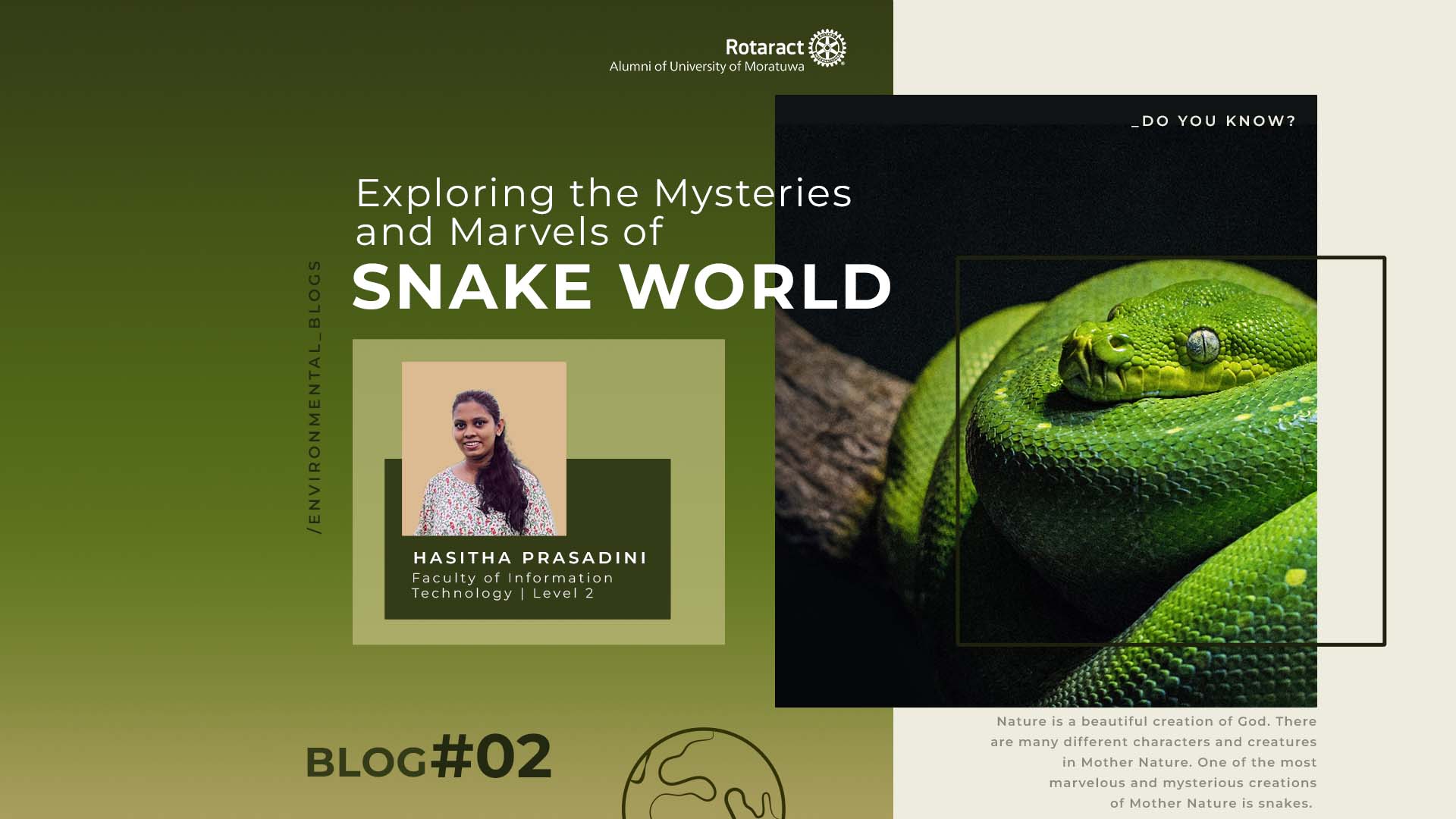
Nature is a beautiful creation of God. Wild, pure, inspirational seen as many things as possible. There are many different characters and creatures in Mother Nature, some are sweet, others merciful, and yet others terrifying. One of the most marvelous and mysterious creations of Mother Nature is snakes. Snakes come in a wide variety of shapes, sizes, and colors. The smallest snake is the thread snake, which is only about 4 inches long. The largest snake is the reticulated python, which can grow up to 33 feet long.

Snakes are incredibly diverse in their coloration, with some being brightly colored while others are more subdued. Some snakes even have patterns that help them camouflage their environment. There are more than 3,500 species of snakes on the planet, and they inhabit a wide variety of habitats, from deserts to rainforests. Approximately 600 species are venomous, with only about 200 species capable of causing harm or killing human beings. Most snakes live on land, but approximately 70 species are found in the oceans.
Snakes can shed their skin several times a year, a process called ecdysis, which allows for growth and helps rid them of parasites. Most snakes lay eggs, but some species, such as sea snakes, give birth to live young. Oviparous snakes lay their eggs in a protected location, such as a rotting log or a burrow, where they are incubated by the heat of the sun or the ground. The number of eggs laid varies by species but typically ranges from 10 to 60.
Live-bearing snakes give birth to live young, which develop inside the female snake’s body and are born fully developed. The number of live young born also varies by species but is typically between 4 and 20.
Snakes play an important role in the ecosystem. They help to control the population of a variety of animal species. Snakes possess numerous unique abilities that aid in their survival and thriving. One of their most distinctive features is their elongated body. This allows them to move through tight spaces and reach prey that would be out of reach for other animals. Snakes also have forked tongues, which they flick in different directions to smell their surroundings. That lets them know when danger or their hunt is nearby. Snakes do not have ears, but they can sense vibrations in the ground. They also have heat-sensitive pits on their faces that help them to detect warm-blooded animals. Snakes are cold-blooded animals, which means that their body temperature changes with the surrounding environment.
They are unique adaptations of snakes. Snakes are thought to have evolved from lizards over 100 million years ago. The earliest snakes were probably small, slender creatures that lived in trees. Over time, snakes evolved to live on the ground, and they developed a number of adaptations that helped them to survive in this new environment.

Another marvelous thing about snakes is the way they slither. They use ‘serpentine locomotion,’ where they flex their bodies in a series of s-shaped curves to propel themselves forward. The way they move also helps in recognizing them. On a dark night, in silence, they move forward and instill fear in human minds. Snakes are often misunderstood and feared. This fear is often due to the fact that snakes are venomous. However, it’s important to remember that only a small percentage of snakes are actually venomous. Most snakes are harmless and pose no threat to humans.
Snakes are facing numerous threats, including habitat loss, climate change, and persecution by humans, with habitat loss being considered a particularly serious threat. Due to construction and human encroachment, forests and natural habitats that snakes rely on are often diminished, reducing the available suitable habitat for them. This forces them to move around in human surroundings, making them vulnerable to becoming prey for people. Humans hunt snakes out of fear, and some people consume snakes as a meal. Therefore, snakes are often killed either out of fear or for their skins or meat.
Climate change is making it difficult for snakes to find food and reproduce. As responsible stewards of our environment, we should strive to protect these marvelous creations of Mother Nature. Supporting organizations dedicated to the conservation of snakes and their habitats is essential. Additionally, we can avoid killing snakes solely because we are afraid of them. We should educate ourselves and others about snakes and help to dispel myths and fear about them.

These mysterious and marvelous creatures were protected by our ancestors, allowing our generation to witness them. As the new stewards of Mother Nature, we should protect these fantastic creatures for future generations.
Hasitha Prasadini
Faculty of Information Technology | Level 2